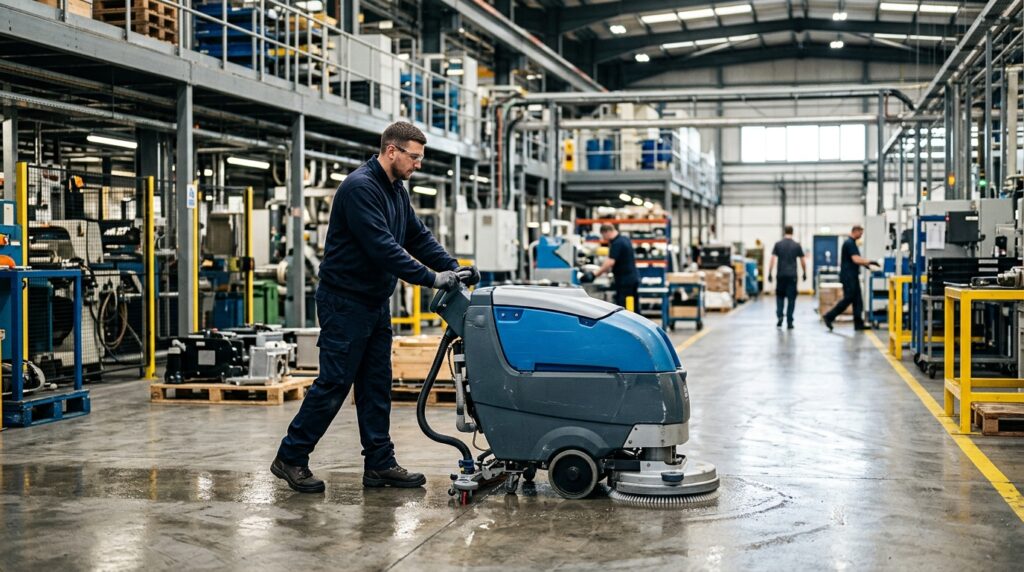
An effective industrial cleaning checklist turns cleaning from a reactive task into a dependable part of site management. Whether you operate a warehouse, factory, commercial kitchen, retail unit, managed apartment building or busy commercial premises, a clear checklist helps teams maintain hygiene, reduce avoidable hazards and present a professional environment every day. This guide explains what to include, how often to schedule tasks and how Valley Cleaning Services Ltd can support a tailored industrial cleaning plan across Manchester, Preston, Lancashire and surrounding areas.
Why an Industrial Cleaning Checklist Matters
Industrial and commercial sites have far more cleaning demands than a typical office. High footfall, vehicle movements, production processes, stock handling, machinery, dust, spillages and waste all create risks that need consistent control. Without a structured industrial cleaning checklist, important tasks can be delayed, overlooked or completed differently from one shift to the next.
A practical checklist provides a shared standard for employees, facilities managers and cleaning professionals. It confirms what needs cleaning, the correct method, the required frequency and the person responsible. It also creates a useful record for monitoring standards and identifying recurring issues.
Key benefits of a documented cleaning routine
- Improved workplace safety: Regular removal of dust, debris, grease and spills helps keep walkways, workstations and shared areas safer.
- More consistent standards: Clear instructions reduce variation between cleaning shifts, teams and contractors.
- Better operational efficiency: Clean, organised work areas make it easier for staff to access equipment, stock and facilities.
- Protection for premises and assets: Routine cleaning can help prevent build-up around floors, fittings, machinery exteriors and high-use areas.
- Professional presentation: Entrances, welfare areas, washrooms and customer-facing spaces reflect directly on your business.
- Stronger accountability: Sign-off processes make it easier to check completion and respond quickly when standards fall short.
The most useful checklist is not a generic document copied from another site. It should reflect your layout, working hours, risk assessment, equipment, occupancy levels and sector-specific requirements. A warehouse with loading bays needs a different schedule from a restaurant kitchen, retail centre or student accommodation block.
Start with a Site-Specific Cleaning Plan
Before listing individual tasks, divide the premises into manageable zones. This makes responsibilities clearer and ensures less visible areas receive the same attention as front-of-house spaces. For larger facilities, zone-based checklists also allow cleaning work to be completed around production, deliveries, tenant access or customer trading hours.
Map your premises into cleaning zones
Most industrial cleaning schedules will include some combination of the following areas:
- Reception areas, entrances, corridors and stairwells
- Production floors, warehouse aisles and storage areas
- Loading bays, dispatch areas and goods-in zones
- Staff rooms, canteens, changing rooms and welfare facilities
- Toilets, washrooms and shower areas
- Offices, meeting rooms and shared workstations
- Commercial kitchens, food preparation areas and dining spaces
- External entrances, smoking areas and waste storage points
Define frequency and responsibility
Each item on an industrial cleaning checklist should state how often it must be completed. Frequency may be per shift, daily, weekly, monthly, quarterly or scheduled as part of a deep clean. High-touch surfaces and washrooms may require multiple checks throughout the day, while high-level cleaning or detailed maintenance tasks can be planned less often.
For every task, record the responsible person or team, the cleaning method, required equipment and a completion field. It is also sensible to include a space for exceptions, such as restricted access, maintenance concerns or a spillage requiring additional action. This supports proactive site management rather than simply ticking boxes.
Daily Industrial Cleaning Checklist
Daily cleaning focuses on the areas that affect hygiene, safety and appearance most immediately. The exact schedule should be adapted to your operations, but the checklist below provides a reliable starting point for commercial and industrial businesses.
Entrances, walkways and shared areas
- Remove litter, loose packaging, dust and visible debris from entrances and access routes.
- Vacuum, sweep or machine-clean floors according to the surface type and level of traffic.
- Check mats, thresholds and door areas for moisture, dirt or trip hazards.
- Wipe touchpoints such as door handles, push plates, handrails, lift buttons and reception counters.
- Empty internal bins and replace liners where required.
- Check that walkways, fire exits and emergency access routes remain clear.
Work areas, warehouses and production spaces
- Remove loose debris from floors, aisles, racking surrounds and workstations.
- Address spills promptly using the appropriate method and site procedures.
- Clean accessible surfaces, control panels and shared equipment exteriors where appropriate.
- Empty waste containers and separate waste according to the site’s disposal arrangements.
- Check corners, beneath benches and around machinery for build-up that could affect cleanliness or safe access.
- Keep loading and dispatch zones clear of discarded wrapping, pallets, strapping and other obstructions.
Washrooms, kitchens and welfare facilities
- Clean and disinfect toilets, basins, taps, flush points and frequently touched surfaces.
- Replenish toilet tissue, hand soap, hand towels and other agreed consumables.
- Mop floors and address wet areas promptly.
- Wipe tables, chairs, kitchenette counters, appliances and sink areas.
- Remove food waste and clean bins to reduce odours and maintain hygiene.
- Check changing areas, lockers and showers for litter, moisture and visible dirt.
In commercial kitchens and food-related environments, the daily checklist should be particularly detailed. Cleaning tasks must be planned around your food safety procedures, equipment instructions and working practices, with clear separation between food preparation, service and waste areas.
Weekly and Periodic Deep-Cleaning Tasks
Daily routines maintain baseline standards, but periodic cleaning tackles the build-up that naturally develops in hard-to-reach, high-use or specialist areas. These tasks are essential for maintaining a clean site over the long term and should be scheduled around operational downtime where possible.
Weekly industrial cleaning checklist
- Detailed floor care: Mechanically scrub suitable hard floors, clean edges and corners, and treat marked areas that daily mopping does not fully address.
- Dust control: Clean low-level ledges, pipes, shelving exteriors, vents and accessible fixtures using methods suitable for the environment.
- Storage areas: Remove debris from beneath racking where safe to do so, clean stock-free zones and inspect for discarded materials.
- Welfare room refresh: Deep-clean kitchen appliances, internal bins, seating, tables, lockers and washroom fittings.
- Glass and partitions: Clean internal glass, mirrors, screens and partitions to maintain visibility and presentation.
- External touchpoints: Clean entrance doors, handles, bins and immediate approach areas.
Monthly and planned specialist tasks
Some requirements will be monthly, quarterly or arranged as a separate specialist service. Depending on the premises, this may include high-level dust removal, deep floor cleaning, carpet cleaning, internal window cleaning, builders cleaning after works, refurbishment cleaning or intensive cleaning before a property inspection or handover.
Landlords, housing associations and managed apartment building operators may also need periodic cleaning plans for communal areas, stairwells, bin stores, vacant units and end-of-tenancy properties. A tailored checklist helps ensure these changing requirements are managed consistently across a portfolio.
Safe Cleaning Practices to Build into Every Checklist
A checklist is only effective when tasks are completed safely. Cleaning teams should have suitable training, access to the right equipment and clear instructions for the environment in which they are working. This is especially important around machinery, vehicle routes, food areas, chemicals, height risks and busy public spaces.
Include these safety controls
- Confirm the correct cleaning product and method for each surface or area.
- Store cleaning products securely and use them in line with product instructions and site procedures.
- Use appropriate personal protective equipment for the task and environment.
- Display warning signage when floors are wet or work could affect pedestrian access.
- Never clean, move or access machinery unless authorised and it is safe to do so.
- Report damaged flooring, leaks, poor lighting, broken fittings and other hazards found during cleaning.
- Keep cleaning equipment maintained, clean and safely stored after use.
- Plan work around staff, visitors, deliveries and production activity to minimise disruption.
Cleaning checklists should also include escalation steps. For example, staff need to know who to contact if they discover a significant spillage, damaged equipment, sharps, pest activity, blocked drainage or an area that cannot safely be cleaned. Recording and communicating these issues promptly is as important as completing the routine task itself.
How Valley Cleaning Services Supports Better Cleaning Standards
Managing an industrial cleaning checklist in-house can be challenging when operational priorities change, staff availability varies or sites require specialist attention. Valley Cleaning Services Ltd provides commercial and industrial cleaning solutions built around each client’s working environment, schedule and cleaning requirements.
With 20 years in business, Valley Cleaning Services supports businesses across Manchester, Preston, Lancashire, Bury, Bolton, Salford, Rossendale, Blackburn, Accrington and Burnley. The team works with offices, warehouses, factories, retail units and industrial facilities, as well as commercial kitchens, accommodation providers and property managers.
A tailored checklist, not a one-size-fits-all service
Valley Cleaning Services can help create a practical cleaning schedule that reflects your site’s priorities, from routine maintenance cleaning to deep cleans following building works, refurbishment or tenant changes. Fully trained cleaning professionals use professional equipment and established systems to deliver reliable, consistent cleaning with clear quality standards.
Flexible working hours allow cleaning to be planned around your operations, helping to reduce unnecessary disruption. Responsive management and a health and safety-focused approach also mean your checklist can remain relevant as site use, occupancy or operational requirements change.
A well-managed industrial cleaning checklist is an investment in safer working conditions, cleaner facilities and a more organised operation. For a tailored commercial or industrial cleaning plan, Valley Cleaning Services Ltd offers dependable support designed around the way your business works.